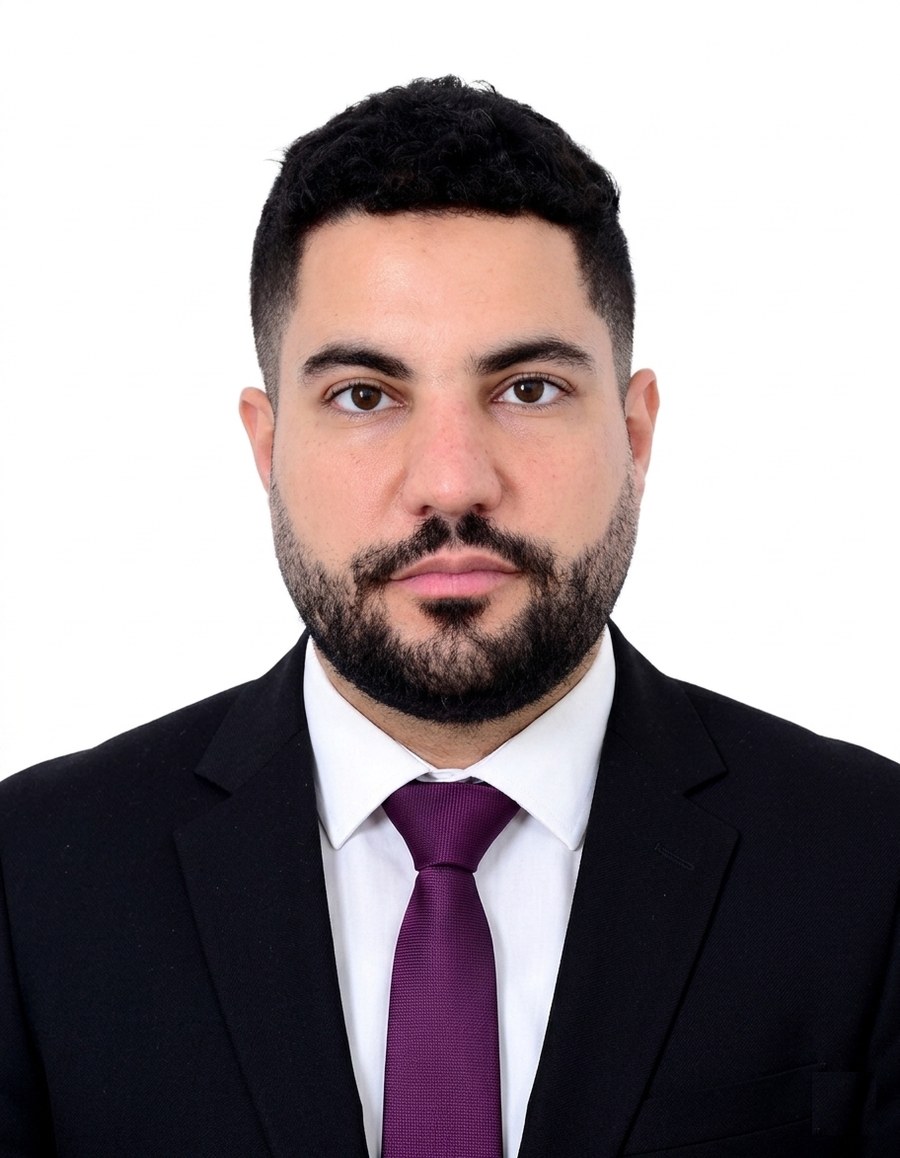
Hadi Zaatiti

Research Scientist · Modelling & Simulation of Dynamical Systems

Hadi Zaatiti
hadizaatiti@gmail.com·+33 6 30 47 27 36 · +971 56 275 4921·zaatiti.fr·Abu Dhabi, United Arab Emirates·French citizen

Doctor of engineering with 10 years of combined industry and academic experience, specialized in the modelling and simulation of dynamical systems across the automotive, military aerospace and healthcare industries.

Experience

Research Scientist (Full-time)

New York University, Abu Dhabi

MagnetoEncephaloGraphy (MEG) and ElectroEncephaloGraphy (EEG) Labs, part of the BioMedical Imaging Core at NYUAD.

  • Experimental design & hypotheses: Collaborate on the design and implementation of MEG/EEG experimental paradigms, aligning technical infrastructure with neurobiological objectives to investigate complex cognitive and clinical phenomena.
  • System integration & maintenance: Maintain and optimize MEG, EEG, and fMRI-compatible EEG systems; proactively adapt hardware and software to evolving research requirements while ensuring peak performance through rigorous calibration and technical monitoring.
  • Advanced analysis & pipeline development: Engineer robust data-processing pipelines and apply sophisticated modeling techniques to transform raw signals into high-fidelity neural data, enabling deeper neuroscientific insight and reproducible results.
  • Scientific impact & lifecycle management: Lead research projects from conceptualization to dissemination, ensuring rigorous methodology and high-quality outputs for peer-reviewed publications and applied clinical contexts.
Jan 2024 to Present


System Designer, MBSE & Simulation Specialist (Full-time)

Airbus Defence & Space

Model Manager for two programs: FCAS (Future Combat Air System) and ED (EuroDrone). Also served as MBSE & Simulation Tutor at Airbus Academy.

  • MBSE processes: Design technical processes for writing requirements and modeling operational, functional and technical architecture elements.
  • Systems engineering deployment: Apply architectural frameworks such as UAF and UBM (Cameo Systems Modeler, Enterprise Architect, Doors, RPE, Jira, Confluence).
  • Mission simulation: Define and simulate mission scenarios at different levels of abstraction (Cameo Simulation Kit, MATLAB).
  • Automate generation & verification: requirements/documentation generation and automated testing/verification of models (JavaScript, NoMagic API, Jenkins, GitHub, Bitbucket).
  • Train and standardize: deliver MBSE and simulation training to future complex-system designers; contribute to state-of-the-art systems engineering (INCOSE, AFIS), ISO standards, and certification programs (CSEP).
Feb 2022 to Jan 2024

System Architect for Autonomous Vehicles & Data Scientist (Full-time)

Institute of Research and Technology SystemX

Architect for autonomous transportation systems in collaboration with RATP, Transdev, SNCF, Renault, PSA, Navya and EasyMile.

  • Autonomous shuttles: Designed, specified and modeled a complete autonomous shuttle system with project partners, ensuring correct behavior via verification and simulation techniques.
  • Representation learning on manifolds (with Stanford and Inria): Worked on data representation on manifolds (mainly graphs) as the 3rd contributor to geomstats.ai, and on learning methods for complex system models (simple, timed and hybrid automata).
Nov 2018 to Jan 2022

System Modeling and Simulation Teacher (Part-time)

École Centrale de Paris, CentraleSupélec

Taught 4th-year engineering students system modeling, requirements engineering and simulation through a practical case: capturing stakeholder needs, building an architecture, evaluating technical solutions and justifying design choices.

Nov 2018 to Jan 2022

Research Engineer (Full-time)

Commissariat of Atomic Energy (CEA)

Modelling, simulation and formal verification of hybrid dynamical systems.

  • Modeled complex systems as finite state machines coupled with differential equations (hybrid automata) and formally verified them via Satisfiability Modulo Theories (SMT and SAT).
  • Developed an approach that automates the abstraction of such models to verify safety properties expressed through constraints.
  • Implemented the approach in C++ (over 15k lines) interfaced with QepCAD and other SMT solvers, and validated it on more than 10 complex examples.
Nov 2015 to Nov 2018

Computer Science Teacher (Part-time)

Université Paris-Sud

During my Ph.D., taught 2nd- and 3rd-year computer science students. Courses included programming languages (C++), algorithms, software testing, networking and routing.

Sep 2015 to Sep 2017

Research Intern (End-of-master internship)

French Commissariat of Atomic Energy (CEA)

Addressed the safety of a cyber-physical railway system by applying a contract-based design methodology and demonstrating it in a 3D graphical model. A Python tool checks whether a safety property is violated throughout an animated automatic-metro scenario.

Mar 2015 to Aug 2015

Education

Doctor of Philosophy (Ph.D.), Computer Science

French Atomic Energy Commission & Université Paris-Saclay
Thesis: "Modeling and Qualitative Simulation of Hybrid Systems"
2015 to 2018

Master of Engineering, System Architecture & Embedded Systems

CentraleSupélec
"Design, Modeling and Architecture of Complex Industrial Systems"
2014 to 2015

Engineering Diploma, Electrical Engineering

Faculty of Engineering, Lebanese University
"Electrical Engineering and Industrial Computing"
2010 to 2015

Skills

Programming & Software Engineering
C, C++, Java, Python, PyTorch, NumPy, Linux, Travis CI, Git, PyCharm, Jenkins
Formal & Symbolic Methods, Solvers
SAT & SMT, UPPAAL, QepCAD, Z3, dReach
Neuroscience (MEG / EEG)
MNE-Python, FieldTrip, BESA
System Architecture, Modeling & Simulation
MagicDraw (Cameo), Enterprise Architect, arKitect, Papyrus, Multisim, MATLAB & Simulink, LabVIEW (certified), Blender 3D
Web Development
HTML, CSS, Angular
Networking
Cisco CCNA 1, CCNA 2, CCNA 3

Languages

English (Advanced)·French (Fluent)·Arabic (Fluent)

Publications

Full and up-to-date list of publications available on Google Scholar.